

How to Protect Hawaii’s Coral Reefs
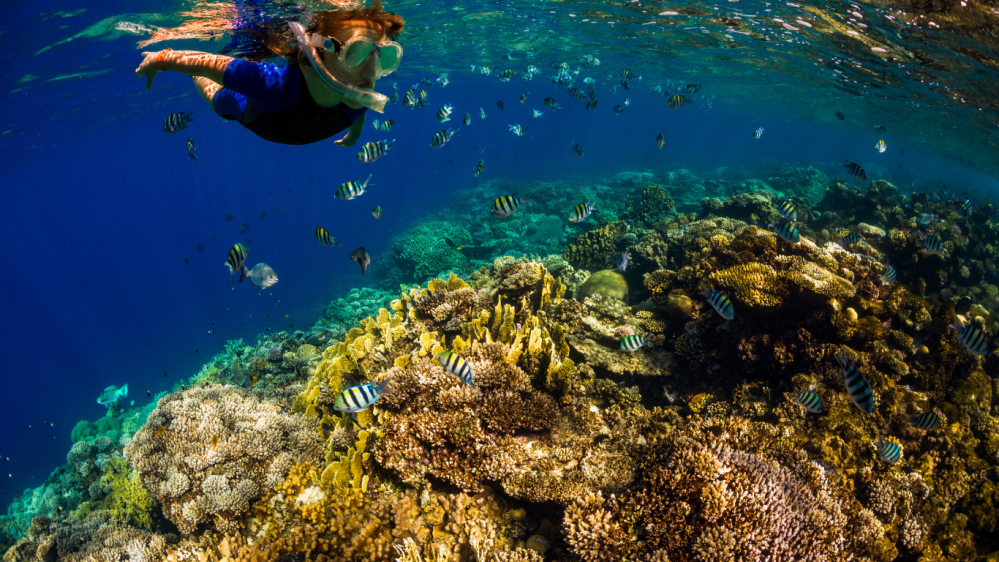
There is a moment on every snorkel tour — the one where you slip beneath the surface and suddenly you are in another world. Below you, coral fans out, giving color to the scenery. A Hawaiian green sea turtle glides past without a glance. Clouds of reef fish part around you like a living curtain.
That world is not a given. Coral reefs cover less than one percent of the ocean floor, yet they support an estimated 25 percent of all marine species. Here on the Kona Coast, the reef is everything: it is the reason guests fly thousands of miles to snorkel with us, the reason the water runs as clear as glass, and the reason dolphins and whale sharks still call these waters home.
It is also under serious pressure. And while the causes are many — warming oceans, runoff, overfishing — one of them is something every visitor carries in their bag: sunscreen.
At Body Glove Hawaii, protecting the reef is not a policy statement. It is kuleana: a Hawaiian word that means both privilege and responsibility. We were the first boat in the state to provide reef-safe sunscreen to every guest on board. Understanding why it matters, what the law requires, and what each person can do helps make your time in our ocean as gentle as possible.
- What Is Coral Bleaching, and Why Should Snorkelers Care?
- Hawaii’s Reef-Safe Sunscreen Law: What Visitors Need to Know in 2026
- Why Are Sunscreen Chemicals Harmful? What Does “Reef-Safe” Actually Mean?
- Body Glove Hawaii’s Commitment: Reef-Safe Sunscreen Is Just the Start
- Support Local: Reef-Safe Sunscreen Brands Made in Hawaii
- Five More Ways to Protect the Reef During Your Visit
What is Coral Bleaching, and Why Should Snorkelers Care?
Coral reefs look like rock, but they are animals. Each coral colony is made up of thousands of tiny polyps that build calcium carbonate skeletons over centuries. What gives coral its extraordinary color is a symbiotic algae called zooxanthellae that lives within the coral tissue, providing the polyp with up to 90 percent of its energy through photosynthesis.
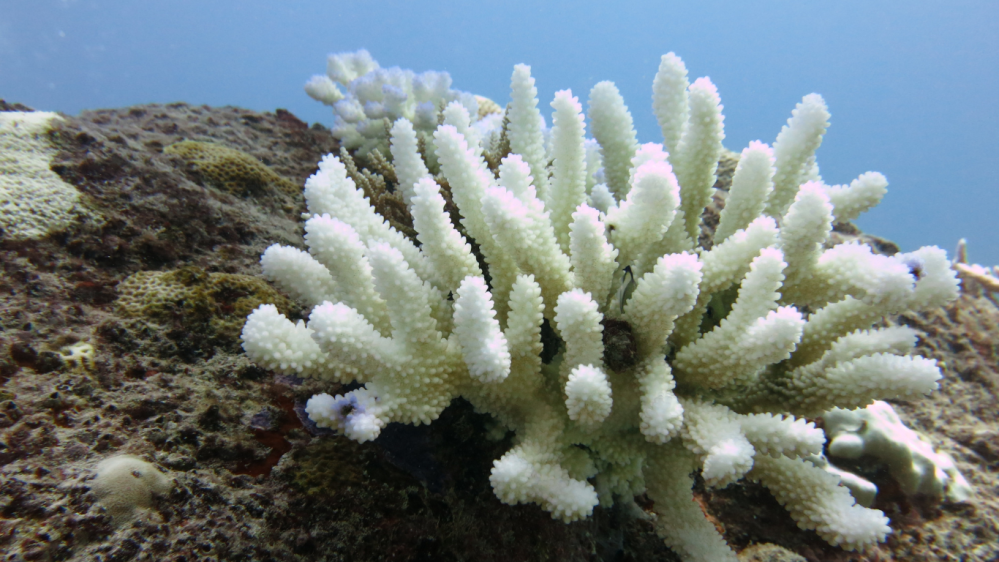
When coral is stressed, by warming water temperatures, pollution, or chemical exposure, it expels that algae. Without it, the coral turns white. This is coral bleaching. A bleached coral is not immediately dead, but it is starving and highly vulnerable to disease. If the stressor persists, it will die. And because coral grows slowly (often less than an inch per year), a reef that takes centuries to form can collapse in a single season of repeated stress.
The Kona Coast is home to some of the healthiest reef systems (and best snorkel spots) remaining in Hawaii, including Red Hill, a marine sanctuary with over 600 documented species that Body Glove’s Deluxe Snorkel tour visits. That health is not accidental: it is the result of careful stewardship by the community, the operators who work these waters, and the visitors who choose to show up responsibly.
Why it matters to your visit: Healthy reef means more marine life, clearer water, and a better snorkel experience. Every choice you make in the water — and before you get in — is a vote for or against that.
Hawaii’s Reef-Safe Sunscreen Law: What Visitors Need to Know
Hawaii made history in 2018 when Governor David Ige signed Act 104: the first law in the United States to ban the sale of sunscreens containing oxybenzone and octinoxate. The ban took effect January 1, 2021. Since then, the restrictions have expanded.
Current sunscreen laws by island:
- Statewide (all islands): Sunscreens containing oxybenzone or octinoxate cannot be sold or distributed without a prescription.
- Big Island (Hawaii County): As of December 1, 2022, non-mineral sunscreens face additional restrictions under Bill 167.
- Maui County (Maui, Lanai, Molokai): As of October 1, 2022, only mineral sunscreens (those using zinc oxide or titanium dioxide as the active ingredient) may be sold or distributed under Bill 135.
If you packed sunscreen from home, check the label. Most mainstream drugstore brands, including some major names like Banana Boat and Hawaiian Tropic in their standard formulas, historically contained these chemicals. Reformulated Hawaii-compliant versions now exist for many brands, but it is still worth verifying.
The simplest rule:
- If the active ingredient is zinc oxide or titanium dioxide, you are good.
- If it lists oxybenzone, octinoxate, octocrylene, avobenzone, or homosalate, leave it for the hotel pool.
Why Are Sunscreen Chemicals Harmful? What Does Reef-Safe Actually Mean?
The science behind the sunscreen ban starts with a landmark 2015 study by Haereticus Environmental Laboratory, which found that oxybenzone damages coral DNA, causes bleaching, and produces developmental deformities in juvenile coral — even at concentrations as low as 62 parts per trillion. To put that in perspective, that is the equivalent of one drop in roughly 6.5 Olympic swimming pools.
Octinoxate has similarly been linked to coral bleaching and has been shown to affect the hormone systems of marine fish. And researchers estimate that somewhere between 4,000 and 6,000 tons of sunscreen washes off swimmers into reef zones around the world every year.
The alternative — mineral sunscreen — works by a fundamentally different mechanism. Instead of absorbing UV rays through a chemical reaction, zinc oxide and titanium dioxide sit on the surface of the skin and physically reflect and scatter sunlight. They do not penetrate the skin as readily, they do not break down in water in the same way, and the scientific evidence of reef harm is substantially lower.
How to Check if Your Sunscreen is Reef-Safe
- Active ingredients: Should say “zinc oxide” and/or “titanium dioxide” only. If it lists anything else, it is a chemical sunscreen.
- Non-nano particles: Look for “non-nano zinc oxide” — particles larger than 100 nanometers are too large for coral polyps to absorb.
- Ignore front-label claims: “Reef-friendly,” “ocean safe,” and “biodegradable” are marketing terms with no legal definition. Read the ingredients list.
- Haereticus HEL List: The Haereticus Environmental Laboratory maintains a list of harmful sunscreen ingredients and a “Protect Land + Sea” certification seal — a reliable independent signal.
Body Glove Hawaii’s Commitment: Reef-Safe Sunscreen is Just the Start
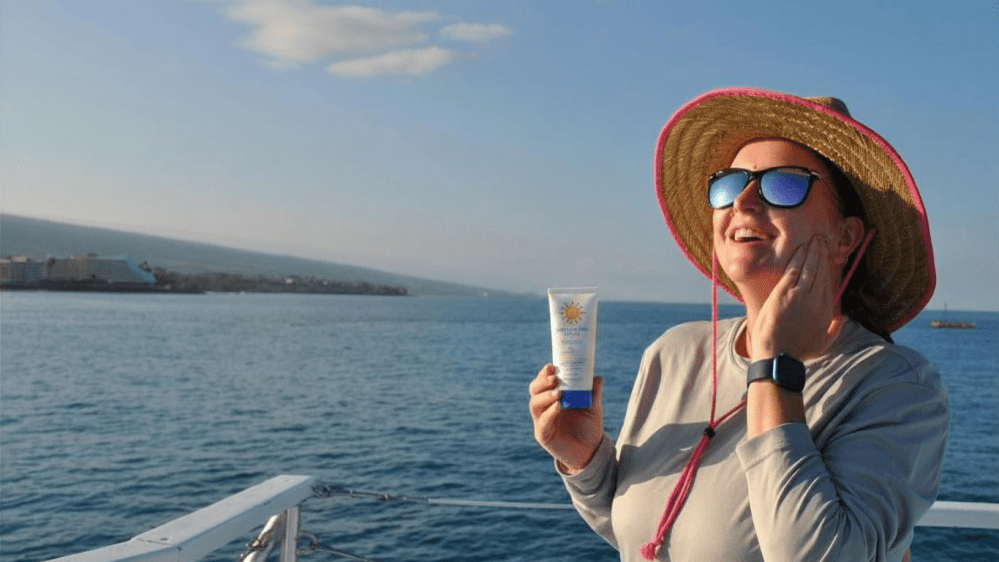
Body Glove Hawaii was the first boat operator in the state to provide reef-safe sunscreen to every guest on board as a standard, before the law required it. We use Stream2sea, a zinc-oxide, Hawaii-safe sunscreen free from the chemicals identified as harmful to reef ecosystems. SPF pump stations are installed throughout the Kanoa II, as well as provided on the Kona Explorer.
But reef-safe sunscreen is just one piece of how we think about our responsibility to these waters.
Our ocean conservation practices
- Marine naturalist narration: On our whale watch tours, a marine naturalist provides in-depth narration about the species and ecosystem guests are observing, which builds the kind of understanding that turns visitors into advocates.
- Responsible wildlife viewing: Our crew follows established guidelines for dolphin encounters and whale watching, including approach distances and ensuring guest experiences do not disturb natural behavior.
- No anchoring on reef: Our vessels avoid anchoring in reef zones to prevent physical damage to coral structures.
- Ocean debris cleanup tour: We offer a dedicated Super-Raft Snorkel and Ocean Debris Cleanup trip, where guests actively remove floating debris from the Kona Coast before snorkeling at an exclusive site. This is one of the only tours of its kind in Hawaii.
- Snorkel at protected sanctuaries: The Deluxe Snorkel tour visits Red Hill, a marine sanctuary. Access is limited; visiting with Body Glove is one of the few ways to experience it.
Support Local: Reef-Safe Sunscreen Brands Made in Hawaii
If you want to bring your own sunscreen and support Hawaii-based makers while you are at it, these brands are worth knowing:
- Stream2sea: an ultra reef-safe sunscreen that we provide on board, and also have available for sale in our shop.
- Little Hands Hawaii: Made right here on the Big Island. Comes in a tin rather than a plastic bottle. Available in tinted and non-tinted varieties.
- Mama KULEANA: Made on Maui. Mineral-based, eco-friendly and reef-safe.
Five More Ways to Protect the Reef During Your Visit
Sunscreen gets most of the attention, but it is one of several choices that add up across thousands of visitors a day. Here are others that matter:
- Apply sunscreen at least 15 minutes before entering the water. This gives your skin time to absorb the lotion, so less runs off into the ocean when you swim.
- Do not touch or stand on coral. Coral is a living animal. A single touch can damage or kill a polyp that took years to grow. Keep fins up, swim horizontally, and look without touching.
- Do not feed fish. It disrupts their natural behavior and feeding patterns, and can cause fish populations to become dependent on humans, which harms the ecosystem’s balance.
- Take nothing from the ocean. In Hawaii, it is illegal to remove coral, rocks, sand, or most marine life from their natural habitat. Leave everything where you found it.
- Choose operators who share these values. Your booking is a vote. Tour operators who invest in reef-safe practices, naturalist education, and responsible wildlife viewing standards are worth supporting, and they tend to offer a better experience for it.
There is no version of Body Glove Hawaii without the reef. Our Big Island eco tours exist to take people into this underwater world and send them back changed: more connected to it, more protective of it, more likely to carry that care home with them.
That is what kuleana means in practice. Not a rule to follow, but a relationship to honor.
We hope to see you on the water. And we hope you will join us on a debris cleanup tour, snorkel the Red Hill sanctuary, and leave these reefs a little better than you found them.